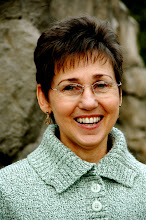
Restministries.org provides great support for those with chronic illness. You'll find chat rooms, books, advice on managing your household and much, much more. Here's a blurb from the website about how Rest Ministries got started.
Rest Ministries, Inc. began in 1996 and became a 501(c)[3] in ‘97. It was founded by Lisa Copen.
Lisa was diagnosed a few years earlier with rheumatoid arthritis at the age of 24 and life had changed dramatically. She searched for some time, but was unable to locate the kind of Christian support that she desired to help her along this unexpected detour of chronic illness.
Surely she couldn’t be the only one who lived with daily chronic pain, and believed in the Lord–and still wasn’t healed, right?
Right! Since 1996 Rest Ministries has reached hundreds of thousands of people–over 80,000 to the web site alone each month. And it continues to grow through the help of our volunteers who keep it going every day. And we are honored to be an affiliate ministry with Joni and Friends International Disability Ministry, the ministry of Joni Eareckson Tada.
Lisa has since been diagnosed with fibromyalgia in addition to rheumatoid arthritis. She recently underwent extensive surgery on her hand because of the crippling effects of RA.
Lisa established Bible study groups called HopeKeepers for those with chronic illness. I'll be teaching a six-weeks HopeKeepers Bible study for women this summer at Denton Bible Church. If you're in the Denton area, I would love to have you join me for hope and encouragement in living with a chronic illness. I've lived with fibromyalgia for over 25 years, and I understand how difficult life can be with the limitations of a chronic illness. But I've also learned how faithful God is and the joy that comes from totally depending on Him for strength.
Please email me if you would like to be notified when the date and time is set for HopeKeepers, or if you have questions. I hope to see you there!
Showing posts with label Bible study. Show all posts
Showing posts with label Bible study. Show all posts
Tuesday, April 20, 2010

Monday, January 25, 2010
Eight Principles for a Joyful Life - #2
The first principle was Fall in Love with Jesus. Here's another obvious principle:
We become more like Christ in proportion to how much time we spend with God in his Word.
For too many years I viewed my Bible time as something to get through rather than focusing on my relationship with God. Too often (though we won't admit it) we view the Bible as boring, hard to read, or not relevant to our lives. But it's not! The Bible is full of exciting stories that relate to our lives. We learn what to do and not do from people in the Bible. God encourages us with verses that comfort, teach, and give us hope. The Bible discerns our heart and our motives and corrects us when we need it.
Here are some suggestions on how to make the Bible come alive for you.
a. Come to the Bible with expectancy. You're meeting with God. Ask him to reveal truth and give you understanding of the passage.
b. Put yourself in the story. Imagine the sounds, smells, sights, and feel of what's going on. Think about Jesus and the triumphal entry. Can you hear the crowds cheering Jesus, feel the breeze of the palm branches, feel the press of the crowds, smell the donkeys? What are you wearing? What are you thinking?
c. Substitute your name in verses like Philippians 1:6. being confident of this, that he who began a good work in Connie will carry it on to completion until the day of Christ Jesus.
d. When I was a student at Dallas Seminary, I took Howard Hendricks' Bible Study Methods. During the course we received "Prof. Hendricks' 9 Questions to Help Apply Any Scripture Passage to Your Life." This invaluable tool has helped me zero in on what God is wanting me to learn from the passage I'm studying. Prof says to:
Ask Yourself, Is There. . .
1. An example for me to follow?
2. A sin to avoid?
3. A promise to claim?
A prayer to repeat?
5. A command to obey?
6. A condition to meet? (Ex: "If you abide in Me, and My words abide in you, ask whatever you wish, and it shall be done for you." (Jn 15:7)
7. A verse to memorize?
8. An error, heresy, or danger to expose?
9. A challenge to face something in your life?
e. Read the passage out loud. There's something about doing this that focuses your mind on what you're reading. Try dramatizing the stories. I love the story of the man born blind that Jesus healed in Matthew 9:1-41. As you read it, put yourself in the different roles (blind man, Pharisees, disciples, man's parents) and read it with the voice and tone that you think each one would have used.
f. There are many good books to help you with Bible study. They include:
Living by the Book (Howard G. Hendricks, William D. Hendricks)
Rick Warren's Bible Study Methods (Rick Warren)
How to Read the Bible as Literature & Get More Out It (Leland Ryken)
The Joy of Discovery in Bible Study (Oletta Wald)
g. Another thing I do is write out the passage and break it down into main thoughts. (I learned this also in Prof's class at DTS). Doing this helps me grasp the intent of the passage. Let's look at Romans 5:3-5.
Not only so,
but we rejoice in our sufferings,
because we know that suffering produces perseverance;
perseverance, character;
and character, hope.
And hope does not disappoint us,
because God has poured out
his love into our hearts
by the Holy Spirit,
whom he has given us.
When I look at the passage this way, I can better understand why we rejoice in our sufferings and also what I can expect God to do through my sufferings. It helps me to meditate on this passage when tough times come.
We will never comprehend all that God's Word contains, but God is faithful in opening our eyes to truth if we approach the Bible with humility, a teachable spirit, and a desire to obey what God shows us.
I pray that as we spend time with God in his Word that we will do so with excitement,anticipating the things God will teach us as he makes us more like Christ and increases our fruitfulness!
We become more like Christ in proportion to how much time we spend with God in his Word.
For too many years I viewed my Bible time as something to get through rather than focusing on my relationship with God. Too often (though we won't admit it) we view the Bible as boring, hard to read, or not relevant to our lives. But it's not! The Bible is full of exciting stories that relate to our lives. We learn what to do and not do from people in the Bible. God encourages us with verses that comfort, teach, and give us hope. The Bible discerns our heart and our motives and corrects us when we need it.
Here are some suggestions on how to make the Bible come alive for you.
a. Come to the Bible with expectancy. You're meeting with God. Ask him to reveal truth and give you understanding of the passage.
b. Put yourself in the story. Imagine the sounds, smells, sights, and feel of what's going on. Think about Jesus and the triumphal entry. Can you hear the crowds cheering Jesus, feel the breeze of the palm branches, feel the press of the crowds, smell the donkeys? What are you wearing? What are you thinking?
c. Substitute your name in verses like Philippians 1:6. being confident of this, that he who began a good work in Connie will carry it on to completion until the day of Christ Jesus.
d. When I was a student at Dallas Seminary, I took Howard Hendricks' Bible Study Methods. During the course we received "Prof. Hendricks' 9 Questions to Help Apply Any Scripture Passage to Your Life." This invaluable tool has helped me zero in on what God is wanting me to learn from the passage I'm studying. Prof says to:
Ask Yourself, Is There. . .
1. An example for me to follow?
2. A sin to avoid?
3. A promise to claim?
A prayer to repeat?
5. A command to obey?
6. A condition to meet? (Ex: "If you abide in Me, and My words abide in you, ask whatever you wish, and it shall be done for you." (Jn 15:7)
7. A verse to memorize?
8. An error, heresy, or danger to expose?
9. A challenge to face something in your life?
e. Read the passage out loud. There's something about doing this that focuses your mind on what you're reading. Try dramatizing the stories. I love the story of the man born blind that Jesus healed in Matthew 9:1-41. As you read it, put yourself in the different roles (blind man, Pharisees, disciples, man's parents) and read it with the voice and tone that you think each one would have used.
f. There are many good books to help you with Bible study. They include:
Living by the Book (Howard G. Hendricks, William D. Hendricks)
Rick Warren's Bible Study Methods (Rick Warren)
How to Read the Bible as Literature & Get More Out It (Leland Ryken)
The Joy of Discovery in Bible Study (Oletta Wald)
g. Another thing I do is write out the passage and break it down into main thoughts. (I learned this also in Prof's class at DTS). Doing this helps me grasp the intent of the passage. Let's look at Romans 5:3-5.
Not only so,
but we rejoice in our sufferings,
because we know that suffering produces perseverance;
perseverance, character;
and character, hope.
And hope does not disappoint us,
because God has poured out
his love into our hearts
by the Holy Spirit,
whom he has given us.
When I look at the passage this way, I can better understand why we rejoice in our sufferings and also what I can expect God to do through my sufferings. It helps me to meditate on this passage when tough times come.
We will never comprehend all that God's Word contains, but God is faithful in opening our eyes to truth if we approach the Bible with humility, a teachable spirit, and a desire to obey what God shows us.
I pray that as we spend time with God in his Word that we will do so with excitement,anticipating the things God will teach us as he makes us more like Christ and increases our fruitfulness!
Subscribe to:
Posts (Atom)